CLIPPER Herbicide for the control of Yellow Water Lily
Written by Scott Hutchens (Murraylands and Riverland Landscape Board) & Joss Pohl (Syngenta Vegetation Management)
Evaluation of CLIPPER® for Control of Yellow Water Lily (Nymphaea mexicana) in Australian Aquatic Systems.
The Yellow water lily (Nymphaea mexicana), an invasive aquatic macrophyte native to Mexico and southeastern United States, poses significant ecological challenges in Australian waterways. This study evaluated the efficacy of flumioxazin (CLIPPER® Herbicide) as a potential control method in heavily infested water bodies along the Murray river system.
Field trials conducted in 2024 demonstrated significant control of N. mexicana through strategic subsurface tablet application, with minimal impact on non-target organisms. Results indicate that flumioxazin provides effective control when applied during optimal growing conditions.
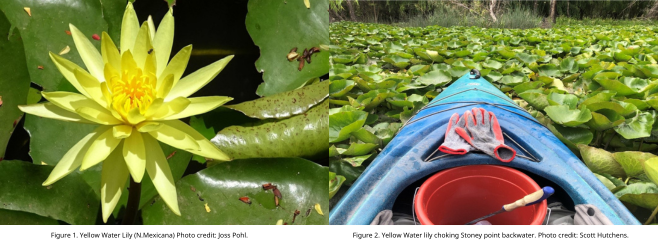
Nymphaea mexicana (Yellow Water Lily) has emerged as a significant invasive species in Australian aquatic ecosystems, presenting substantial management challenges through its rapid colonisation and extensive ecosystem modification. Traditional control methodologies have demonstrated either limited efficacy or posed considerable environmental risks, necessitating the development of more effective and environmentally sustainable solutions.
CLIPPER® Herbicide, formulated as dissolvable effervescent tablets containing flumioxazin as its active ingredient, represents an innovative approach to aquatic weed management. As a Group 14 herbicide, flumioxazin functions as a protoporphyrinogen oxidase (Protox) inhibitor, specifically targeting the plant-specific enzyme variant found in chloroplasts. This selective mechanism of action ensures minimal impact on vertebrate organisms, as their mitochondrial Protox enzymes differ structurally and they possess more sophisticated detoxification systems.
Key CLIPPER® characteristics include its fast-acting nature, versatility in controlling various aquatic weed types (submersed, emergent, and floating), and relatively low environmental impact with its demonstrated low toxicity to aquatic fauna. All of which made it a prime candidate as a sustainable solution for managing N.mexicana infestations in Australian waterways, considering both its immediate control efficacy and broader environmental implications.
Study, Site and Experimental Design
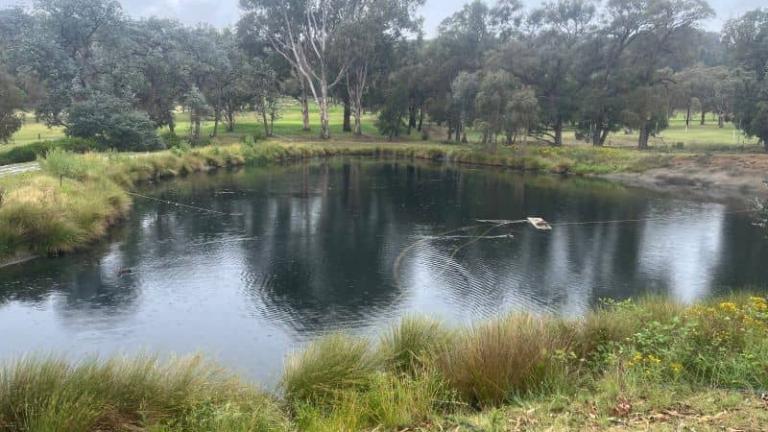
The study was conducted at two sites: Site 1: Caurnamont shacks and Site 2: Stoney Point, Australia, during November-December 2024. The treatment site consists of backwater heavily infested with N. mexicana.
Site selection criteria included:
• Established N. mexicana population
• Minimal water flow
• Accessibility for treatment application
• Representative water depth (average 0.5m)
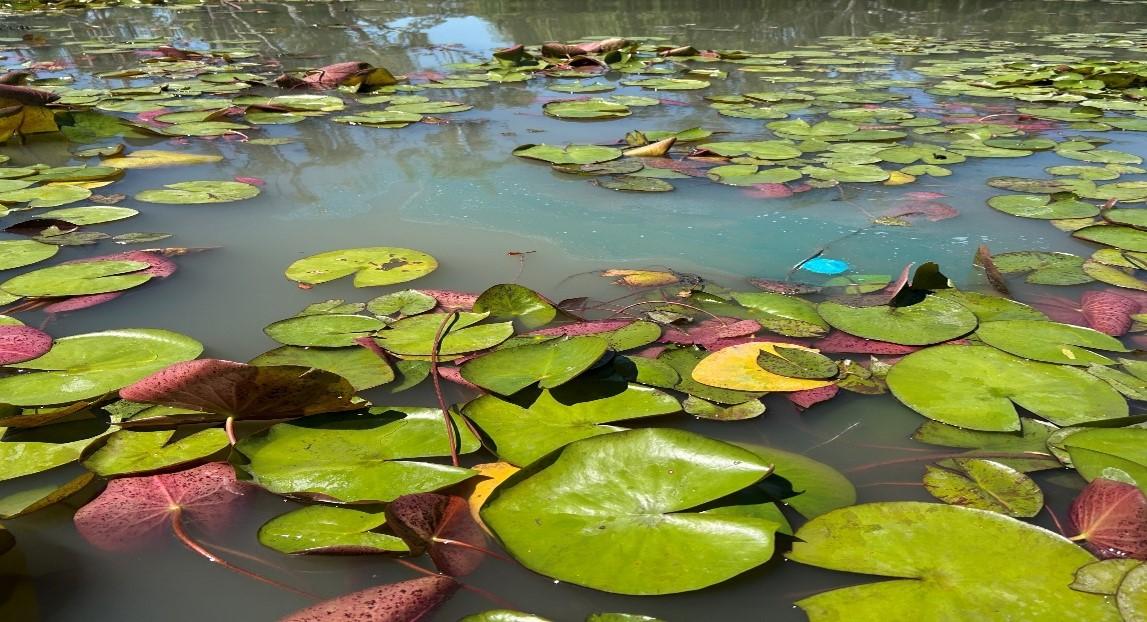
Figure 3. CLIPPER® tablet dissolving amongst Yellow Water Lily. Photo Credit: Scott Hutchens
Site Characterization
Prior to treatment, comprehensive site mapping was conducted using:
1. Survey 123 Mapping Tool integrated with GIS software for precise area delineation
2. Manual depth measurements at 5m intervals across the treatment area
3. Water quality parameters: pH: 6.8 (measured using calibrated pH meter)
Treatment Calculations
Volume calculations performed using the following formula:
Length × Width × Average Depth = Total Volume
For example: Stoney point site 2: 65m × 160m × 0.5m = 5,200m³ (5.2 megalitres)
Herbicide application rate was determined according to label specifications: 27 tablets per megalitre, with individual tablets covering 37.5m³ of water volume.
Total tablets required for Site 2: 5.2 ML × 27 tablets = 140 tablets
Application Method
Treatment was conducted using a systematic approach:
1. Primary application method: Kayak-based subsurface tablet placement
2. Secondary method: Hand throwing from kayak in densely infested areas
3. Tablet spacing: Approx 7m intervals, adjusted based on:
- Infestation density
- Water depth
4. Treatment timing: Mid-morning to early afternoon to maximize photosynthetic activity.
Treatment Protocol
1. Pre-treatment documentation:
- Photographic evidence of infestation
- GPS mapping of treatment boundaries
- Initial water quality measurements
2. Application process:
- Systematic coverage from center to outer edges
- Real-time adjustment of tablet placement based on visible infestation density
- Omission of uninfected areas to concentrate treatment in heavily infested zones
3. Post-treatment monitoring:
Due to location, visual assessments were completed every 10 days for the first month and monthly afterwards.
Results
Treatment efficacy was evaluated through visual assessment of plant mortality and water clarity. Significant browning of N. mexicana occurred post-treatment, resulting in improved water clarity throughout the treatment area.
Marginal areas with water depth <0.5m showed reduced efficacy, requiring supplementary treatment with aquatic friendly glyphosate.
Both sites completed treatment in one day, proving time efficiency for CLIPPER® versus other foliar spray herbicides
Site 1: Caurnamont shacks
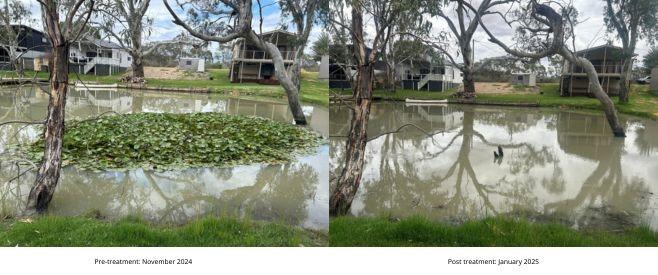
Site 2: Stoney Point Backwater
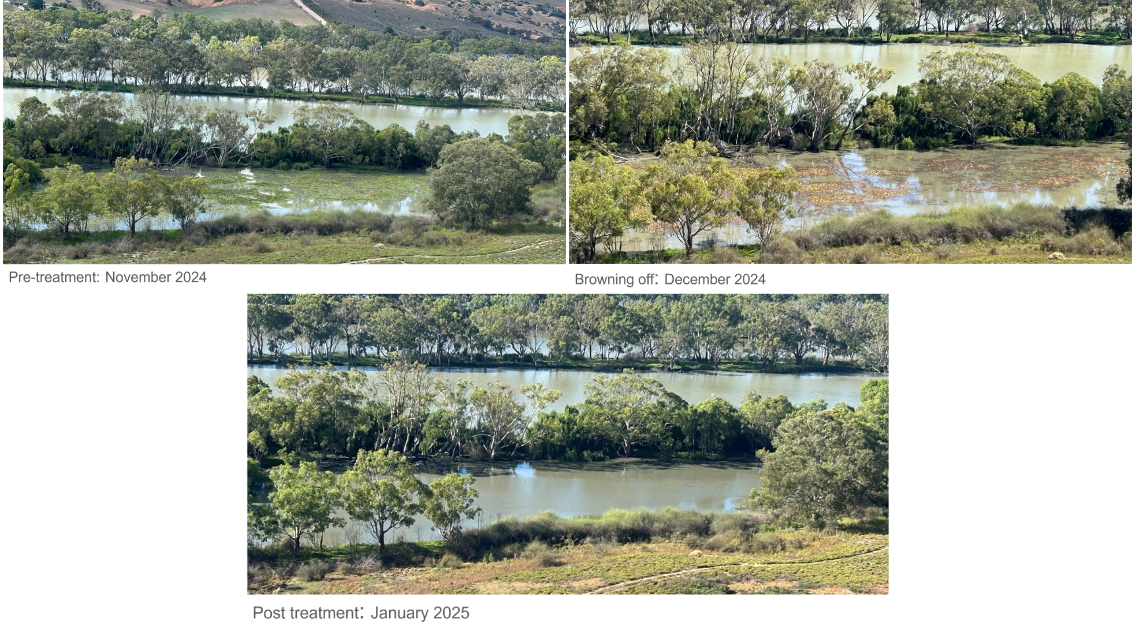
Conclusion
The study demonstrates that CLIPPER® provides effective control of N. mexicana when applied during optimal growing conditions.
Treatment success was primarily influenced by three key factors:
- Timing of application during peak photosynthetic activity
- Water depth and volume calculations
- Strategic tablet placement based on infestation density
The CLIPPER® Direct Tablet delivery method proved particularly effective as an initial knockdown strategy for heavy infestations, especially in areas inaccessible to conventional spray boats. This approach significantly reduced operational time and resource requirements while achieving substantial biomass reduction.
CLIPPER® demonstrates promising potential as a standalone treatment for N. mexicana control in aquatic systems, particularly during active growth periods.
While effective in adequately deep-water bodies, shallow marginal areas may require supplementary water movement methods to ensure the herbicide is carried throughout the area and with higher infestations there may be a requirement for additional treatments.
Recommendations
CLIPPER® Herbicide, applied using the Direct Tablet delivery method, has proven highly effective in managing aquatic weed infestations, particularly Nymphaea mexicana (Yellow Water Lily). This application method is especially valuable in water bodies with limited access for conventional spray equipment.
Successful implementation depends on strategic timing during peak plant growth periods, accurate water depth calculations, and proper tablet placement based on infestation density.
The system allows for efficient treatment, typically completed within a single day, making it a time-effective solution for weed control.
Follow-up management may be required in shallow marginal areas where water depth is insufficient for tablet application or high-density areas. In these cases, foliar spray applications using either CLIPPER® or bioactive glyphosate have proven effective as secondary control measures.
This integrated approach, combining CLIPPER® tablet application with targeted follow-up treatments, provides an efficient and comprehensive solution for aquatic vegetation management while minimising resource requirements.
Acknowledgements
This project is supported by the Murraylands and Riverland Landscape Board with funding from the South Australian Government's Landscape Priorities Fund and the landscape levies.
If you have any questions, concerns, or suggestions, please reach out to us via the contact us page.